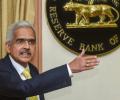
RBI says haste in easing norms for banks harmful to economy.

India's largest PSU bank, State Bank of India, delivered excellent results, once the impact of a big jump in employee expenses was adjusted for. The net interest income (NII) beat the Street due to a better net interest margin (NIM) and good loan growth. The credit growth at 5.2 per cent quarter-on-quarter (Q-o-Q) (15 per cent year on year) was excellent for a large bank.

Transiting from "survival mode", which took most of the management time in FY21, the bank has been able to take a long-term view in terms of growth and preparing technology in the past 12 months.

After a tumultuous past few days that almost halved value of the Adani group, embattled tycoon Gautam Adani-led conglomerate had some pressure eased on Friday as two global rating firms stuck with their calls on its credit profile and its French partner backed its investments in the group firms. Also for the first time since January 24, shares of the group's flagship firm Adani Enterprises ended in positive territory after erasing an intraday loss of 35 per cent. Adani Ports and SEZ also ended 8 per cent higher. This is after a over $100-billion rout in value of group stock since the US short seller Hindenburg Research accused Adani group of stock manipulation and accounting fraud.

Given the uncertain macroeconomic conditions, most brokerages have turned slightly cautious on the pace of growth in State Bank of India's (SBI's) earnings going ahead. While they don't see any significant risk arising for now, its sheer balance sheet size and systematic importance has nudged them to cut earnings estimates for fiscal year 2023-24 (FY24) and 2024-25 (FY25) up to 5 per cent. India's largest state-owned bank, on Thursday, reported standalone net profit of Rs 16,694.51 crore for Q4FY23.

RBL Bank's interim chief executive officer (CEO) and managing director (MD) Rajeev Ahuja on Sunday tried to allay concerns around the health of the bank. He said events during the weekend are not linked to RBL's asset quality. The bank said Vishwavir Ahuja, its managing director (MD) and chief executive officer (CEO), had on Saturday proceeded on leave with immediate effect on medical grounds.

Punjab National Bank on Monday allayed concerns about its exposure to Adani companies and noted that its loans to the group are diversified into 8-9 companies, which are generating sufficient cash. Atul Kumar Goel, the bank's MD & CEO, in a post-earnings call said total exposure to Adani group, so far, stands at Rs 7,000 crore, of which Rs 2,500 crore is in the airport sector. He further said there is "no worry as the exposure is not very big" and that the bank is keeping an eye on the development that is taking place.
The bank will now be in a position to resume normal lending activity, including corporate lending, with tightened risk management framework.

After removing three PSBs - BoI, Mahabank and OBC from the framework, RBI, on Tuesday, took out three commercial banks - Allahabad, Corporation and Dhanlaxmi from the said list.

Arun Jaitley had promised to provide more than the budgeted amount.

A strong business update for the April-June quarter of the 2023-24 financial year Q1FY24 has led to a big jump of over 7 per cent in the share price of Bajaj Finance on Tuesday (July 4). The non-banking financial company's (NBFC's) new loan book grew 34 per cent with 9.9 million new loans booked in Q1FY24 from 7.2 million loans booked in Q1FY23. The company's total customer franchise rose to 72.98 million (as on June 30, 2023), compared to 60.30 million year-on-year (YoY) with the highest-ever quarterly increase of 3.84 million in Q1FY24. Assets under management (AUM) grew by 32 per cent to about Rs. 270,050 crore in Q1FY24 from Rs. 204,018 crore in Q1FY23.

Despite a shaky Q3, conviction over the stock remained high, with 65 per cent of the analysts polled on Bloomberg retaining their 'buy' recommendation.

The central bank has not set a deadline for banks to conclude the stress-test exercise, but senior bankers opine that some were already looking at this, and will now fast-track it by September-end, when they will have a better picture of their books after the moratorium on the servicing of loans and a 180-day view on the performance of borrowers' accounts.

The World Bank must become Archimedes's lever to help change the world into a more prosperous, inclusive, and sustainable planet in the 21st century. The change in leadership now provides that opportunity, observes Ajay Chhibber.

'Pockets of mid and small-cap indices are showing exuberance and are discounting even FY23 valuations now.'

The country's biggest bank SBI on Wednesday posted a 55 per cent rise in standalone net profit at Rs 6,504 crore for the first quarter of the current financial year, helped by decline in bad loans. The lender had reported a net profit of Rs 4,189.34 crore in the April-June quarter of 2020-21. State Bank of India's (SBI) standalone total income increased to Rs 77,347.17 crore in the first quarter of 2021-22 as against Rs 74,457.86 crore in the same period a year ago, according to regulatory filing.

The central government is on track to meet its fiscal deficit target of 6.4 per cent of the GDP for 2022-23 on the back of strong growth in revenue collections, the World Bank said in its India Development Update on Tuesday. High nominal GDP growth in the first quarter supported strong growth in revenue collection, especially Goods and Services Tax (GST), despite tax cuts on fuel. Notwithstanding an increase in spending due to expanded fertilizer subsidies and food subsidies for vulnerable households in response to the commodity price shock, the government is on track to meet its FY22/23 fiscal deficit target of 6.4 per cent of GDP and the general government deficit is projected to decline to 9.6 per cent from 10.3 per cent in FY21/22 and 13.3 per cent in FY20/21.

The financial sector has been deeply troubled since 2013. It is now in a full-blown crisis, warns Devangshu Datta.

Raghuram Rajan optimistic about passage of GST

In yet another move to close the regulatory gap between banks and shadow banks, the Reserve Bank of India (RBI) has mandated exposure limits to the non-banking finance companies, in line with commercial banks. In the large exposure framework released on Tuesday, the regulator capped aggregrate exposure of NBFCs which are in the upper layer toward one entity at 20 per cent of capital base. The limit can only be extended by another 5% with board's approval. For a particular borrower group, the cap is at 25 per cent, with additional 10 per cent if exposure is towards infrastructure.

PSB executives said loans to group holding company IL&FS and entities might still be treated as "standard".
The bank expects to grow loan book by 10 per cent in the current financial year with calibrated exposure to corporate accounts and thrust on the retail segment.
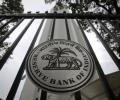
RBI may also be open to injecting liquidity through open market purchases of bonds but is resisting relaxing capital buffers for banks.

'I don't think we have ever seen such alignment of everything that we need in the banking sector.'

Relations with the government, the bank's majority owner, are a tricky issue for all SBI chiefs, and, like all his predecessors, Khara will be closely watched for his equations with the finance ministry representative on the SBI board.

Thanks to the recapitalisation by the government and measures taken by the central bank, collapse of any large housing finance company won't pose as big a risk as it had six months ago.

The current wage revision for PSBs, as well as some private lenders, is due from November 2017 for five years - up to October 2022.

New-generation private sector banks such as ICICI, HDFC, Axis, Kotak etcetera owe their existence to the recommendations of the first Narasimham Committee.
'Quality of management, corporate governance, allocation of capital, full disclosures should form the basis to decide investing in a particular stock.'

Analysts say loan growth, Casa ratio and exposure to sectors under pressure did not indicate any stress at United Bank.

'China is in a good position to defuse financial risks.'
Gross bad loans of banks may rise from 6.9 per cent in September 2021 to 8.1-9.5 per cent by September 2022 if the Omicron variant strikes the economy hard, as per the financial stability report of the Reserve Bank released on Wednesday. The report also said that the rising stress level in the retail loan portfolio of banks -- the mainstay of bank credit for many years now -- was led by home loans, which grew in double-digits so far this fiscal. While asset quality improved, with gross non-performing assets (GNPA) and net NPA (NNPA) ratios declining to 6.9 and 2.3 per cent, respectively, in September 2021, the slippage ratio inched up during the same period as private sector banks showed a higher rate of deterioration in asset quality, as per the report.

'The ship has been stabilised.' 'For the last 6-7 quarters, profitability is stable around Rs 250-Rs 300 crore.'
Morgan Stanley removed banking stocks from its model portfolio when it slashed its weighting on the sector by 500 basis points. Several foreign brokerages, such as UBS, JP Morgan, and Credit Suisse, of late, have also become less optimistic about banking stocks.

'We are very watchful about inflation and growth. But the main challenge is economic revival and growth.'

Government to infuse funds in cash-strapped banks.

Standalone total income increased to Rs 74,457.86 crore in the first quarter of 2020-21, from Rs 70,653.23 crore in the same period a year ago.

PSBs' gross NPA ratio may decline to 12 per cent by March 2019 in the baseline scenario, whereas private banks' gross NPA ratio may decline from 3.7 per cent to 3.2 per cent in March 2019.
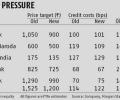
Banking stocks, including top ones like State Bank of India, ICICI Bank, HDFC Bank, Bank of Baroda and Bank of India, among others, have fallen sharply in the last one month.

Non-performing assets of banks have been on the rise for past several months due to slowdown in the economy.
